Need mold inspection & testing in Brentwood?
Tell us what you are seeing at home. Send a quick estimate request to contact@givenpeak.boutique or use the form, and a local provider can follow up with you.
No obligationRequest an estimate today
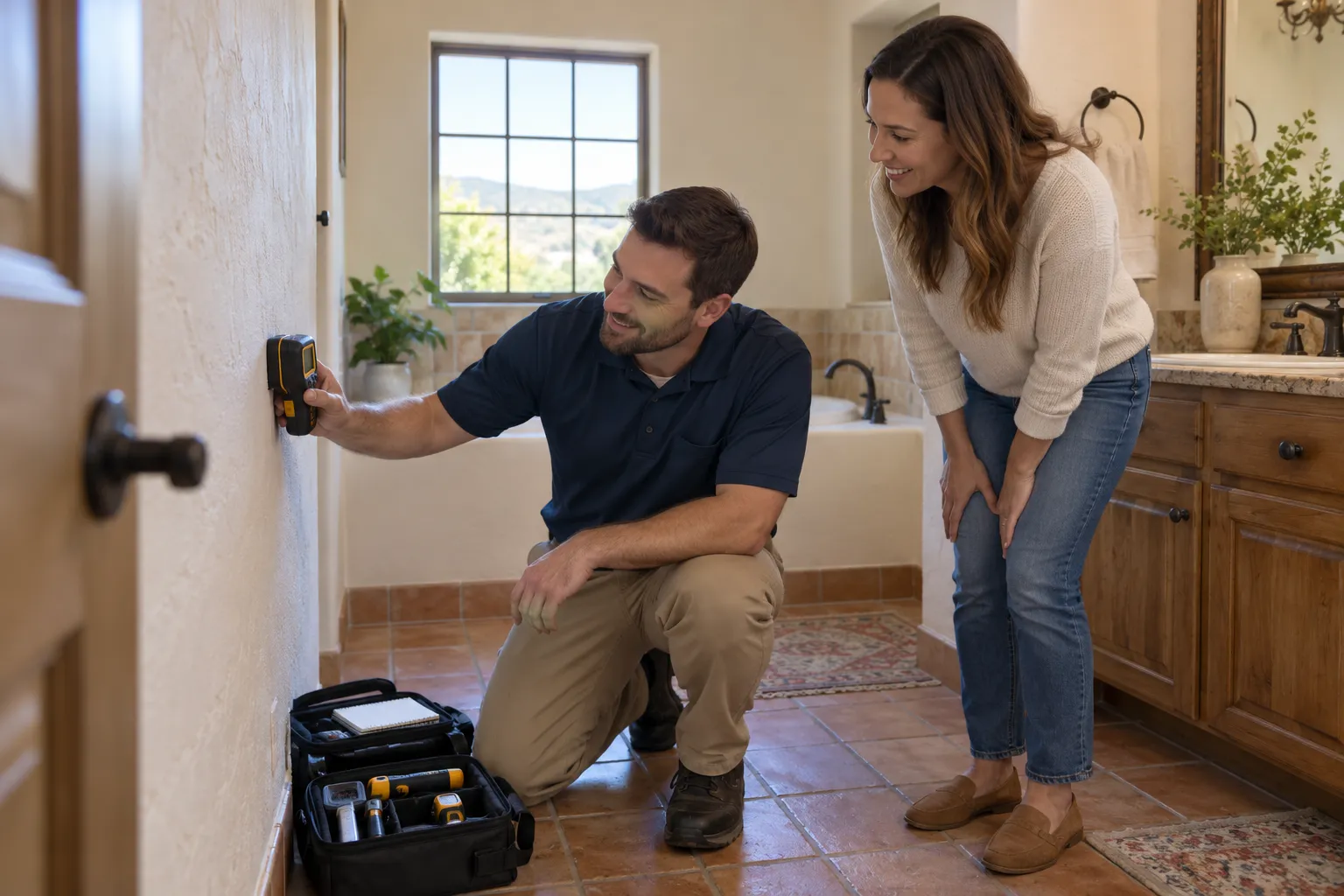
Finding a strange stain or catching a damp, earthy smell can make your stomach drop. Take a breath. A mold inspection is simply a careful look at your home, so you know what is growing, where it is, and why. Providers in our network check for hidden moisture, take samples when they make sense, and explain the results in plain words.
Givenpeak Mold Help is a referral service. We do not do the inspections ourselves. We connect homeowners in the Brentwood area with independent local providers who do. Request an estimate, compare what each provider offers, and choose the one that feels right. The goal is to fix the problem, then keep the home dry so it stays fixed.
Take a breath. A musty smell or a dark patch on the wall is worth checking, but it is rarely something you must solve this minute. A few things are time-sensitive, though, so they come first.
Mold needs water. If something is leaking, dripping or soaking a wall, deal with that source before anything else. Shut off the water to a leaking fixture, run a fan, and open a window if the outdoor air is dry. A wet spot left alone keeps feeding the problem, no matter what a test says later.
It is tempting to wipe the spot away. Try not to. Scrubbing can scatter spores into the room, and cleaning can erase the clues an inspector needs. Take a few photos, close the door to that room, and leave the rest to the provider.
If you have a baby, an older adult, or someone with asthma, allergies or a weak immune system at home, don't wait long. Stuffy noses or a cough that eases when you leave the house can be clues. They do not prove mold, though. A doctor is the right person for health questions.
Catch it early, and a small problem stays small. Watch for:
Most people searching "mold inspection near me" are in one of a few spots. You see something and want to know what it is. You smell something but see nothing. Or you had a leak and want to be sure the house dried out. Buying or selling a home is another common reason.
Long dry seasons make it easy to forget about moisture. Then a winter rain event finds a weak spot in the roof or a crack in the stucco, and the damp hides inside a wall.
The provider usually starts by listening to your story. Then they walk the home and look at the visible areas. They check walls and floors with a moisture meter, and many use a thermal camera to spot cool, damp areas behind surfaces. Attics, crawl spaces, under-sink cabinets and window frames get extra attention. Expect a visit of one to a few hours, depending on the size of the home.
Not every home needs every test. Your provider can explain which fit your situation.
When you look for certified mold testing, ask what credentials the provider holds and which lab analyzes the samples.
Color alone does not tell you the type. Many molds look dark or black. Testing can help identify what you have. For black mold remediation, the approach is much like other mold: find the water, contain the area, and remove what is affected. Your results help guide that plan.
The lab report lists the types of spores found and how many. Numbers only make sense with context, such as the outdoor sample taken at the same time. A good provider walks you through it in plain words and gives you a written report. Ask what they think caused the growth, not only what grew.
Some providers do both jobs. Others only inspect. Keeping them separate can give you an independent view of the problem. Using one provider for both can feel simpler. Either path is fine. If cleanup is needed, residential mold removal is its own step with its own estimate, so ask how the provider handles that handoff.
Fix it, then keep it. Once the cause is handled, the habits matter most. Keep indoor humidity roughly between 30 and 50 percent. Run bathroom and kitchen fans. Check under sinks each season, and keep gutters and soil sloping away from the house. Dry home, calm mind.
You do not need to figure it all out today. Request an estimate, or Request a callback to check provider availability. A local provider can take a look and tell you where things stand.
Meters and thermal imaging help the provider find damp areas hiding behind walls, floors and ceilings.
Attics, crawl spaces, closets and under-sink areas get a careful look for growth.
Air or surface samples are sent to a lab to identify what is growing.
You receive findings in plain words, plus the likely cause and suggested next steps.
Prices vary by home size, region and how many samples are taken. These are typical U.S. ranges only. Always ask for a written quote before you agree to any work.
| Item | Typical range | Notes |
|---|---|---|
| Visual inspection only | $300 – $500 | Walkthrough and moisture readings, no lab |
| Inspection with sampling | $450 – $1,000 | Includes a few samples and a short report |
| Surface swab or tape lift (each) | $50 – $150 | Lab fee for one stain or patch |
| Air sample with outdoor comparison | $75 – $250 | Per sample, lab analysis included |
| Thermal imaging or moisture mapping | $200 – $500 | Often bundled into the inspection |
| Larger or multi-area home inspection | $1,000 – $2,500 | More rooms, attic or crawl space |
Tell us what you noticed, and we pass your request to local providers.
A provider inspects, checks moisture and takes samples if needed.
You get a written report and a plain explanation of the findings.
Choose next steps, then use simple habits to prevent new moisture problems.
Independent providers in our network know the local housing, from older bungalows to stucco ranch homes on slabs.
Ask for plain-language results so you know what was found and why.
Nobody rushes you. You get information first, then decide the next step.
Request an estimate and compare options before choosing any provider or service.
Tell us what you are seeing at home. Send a quick estimate request to contact@givenpeak.boutique or use the form, and a local provider can follow up with you.
No obligationConsider one if you smell something musty, see stains or fuzzy spots, or have had a leak or flood. Moisture problems and lingering odors are good reasons to have a provider take a look.
Typical U.S. prices run from about $300 for a basic visual check to $1,000 or more with lab samples. Costs vary by job, so get a written quote.
Store-bought kits can show that spores exist, but spores are normal indoors and outdoors. They rarely show the source or amount. A provider can find hidden moisture and explain results.
Tell us what you are seeing at home. Send a quick estimate request to contact@givenpeak.boutique or use the form, and a local provider can follow up with you.
No obligation